
Lipids are essential components of biological membranes, providing the structural framework that allows proteins to anchor. The primary classes of lipids found in the plasma membrane are phosphoglycerides also known as glycerophospholipids, which form the basic bilayer; sterols, in particular cholesterol, which regulate membrane fluidity and integrity; and sphingolipids, which are involved in cellular signaling and recognition.
One of their common properties is that all three are amphipathic, meaning they have a polar hydrophilic head and a hydrophobic tail.
Table of Contents
Phosphoglycerides
Phosphoglycerides (or glycerophospholipids) are the main components of the lipid bilayer. They consist of two long fatty acid chains, known as the hydrophobic tails, which are linked by two ester bonds to a glycerol-3-phosphate backbone. Finally, a polar head group, typically an alcohol, is attached to the phosphate.
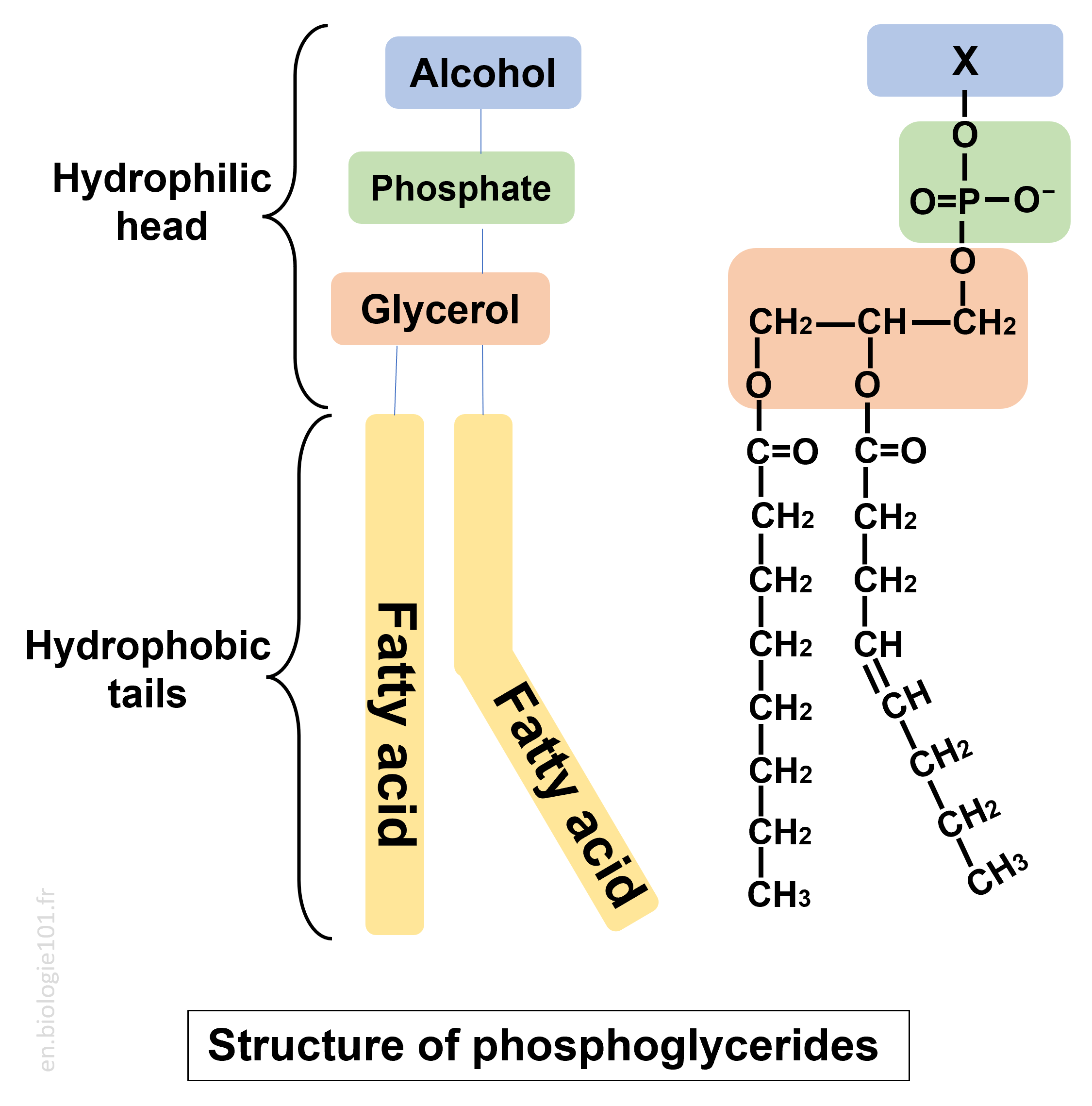
Fatty acids have the general formula CH₃-(CH₂)ₙ-COOH, where n is typically 14 or 16. The two fatty acid chains are not necessarily identical; they can vary in length (the number of carbons they contain) and in degree of saturation (zero, one, or two double bonds). The presence of a double bond creates a kink in the chain, which influences the fluidity of the lipid bilayer. Fatty acids are classified as saturated when they have no double bonds, monounsaturated when they have one double bond, and polyunsaturated when they contain multiple double bonds.
The nature of the polar head group also varies, allowing for the classification of different types of phosphoglycerides or glycerophospholipids.
- Phosphatidic acid (PA) when there is no polar head
- Phosphatidylcholine (PC), the head is a choline molecule
- Phosphatidylethanolamine (PE), the head is an ethanolamine
- Phosphatidylserine (PS), the head is a serine
- Phosphatidylinositol (PI), the head is an inositol
- Phosphatidylglycerol (PG), the head is a glycerol
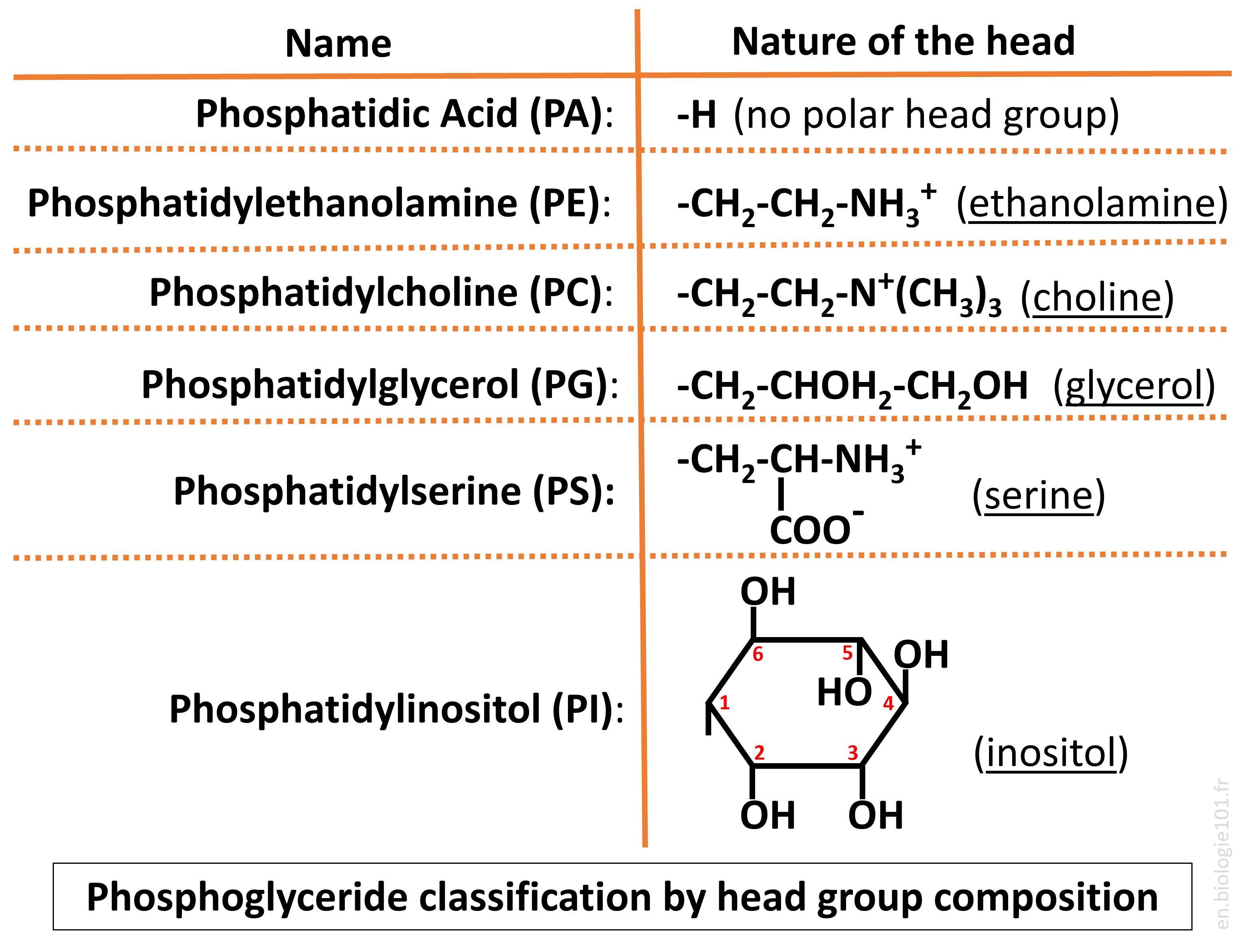
Each of these phosphoglycerides has different properties. Phosphatidylethanolamine (PE) and phosphatidylcholine (PC) generally have neutral polar heads, while phosphatidic acid (PA), phosphatidylglycerol (PG), phosphatidylinositol (PI), and phosphatidylserine (PS) possess negatively charged polar heads. Phosphoglycerides are amphipathic molecules at physiological pH, as they contain both acidic and basic groups.
Phosphatidylinositol can be phosphorylated at multiple positions to generate various phosphatidylinositides, such as phosphatidylinositol 4,5-bisphosphate (PIP2), which are essential for cellular signaling pathways.
Sphingolipids
Sphingolipids are a class of phospholipids, similar to phosphoglycerides, but feature a sphingosine backbone instead of glycerol. When sphingosine is associated with a single fatty acid via an amide bond, it forms a ceramide, which serves as a fundamental building block for more complex sphingolipids.
The most well-known sphingolipid is sphingomyelin, which is abundant in the myelin sheaths of axons in the nervous system. Sphingomyelin consists of a ceramide linked through its primary alcohol to phosphocholine, primarily found in animal cells. Sphingolipids are predominantly located in the less fluid regions of cell membranes, contributing to membrane stability and organization.
Another notable class of sphingolipids is glycosphingolipids, which do not contain a phosphate group; instead, they feature sugar moieties linked to ceramide. Glycosphingolipids play important roles in cell recognition, signaling, and the formation of protective barriers. They are abundant in the outer leaflet of the plasma membrane. We will discuss glycosphingolipids in the chapter dedicated to membrane sugars.

Sterols
Cholesterol is the most abundant sterol in animal plasma membranes and consists of a rigid core formed by four fused rings (sterane), to which a polar hydroxyl group (-OH) and a short non-polar hydrocarbon tail are attached.
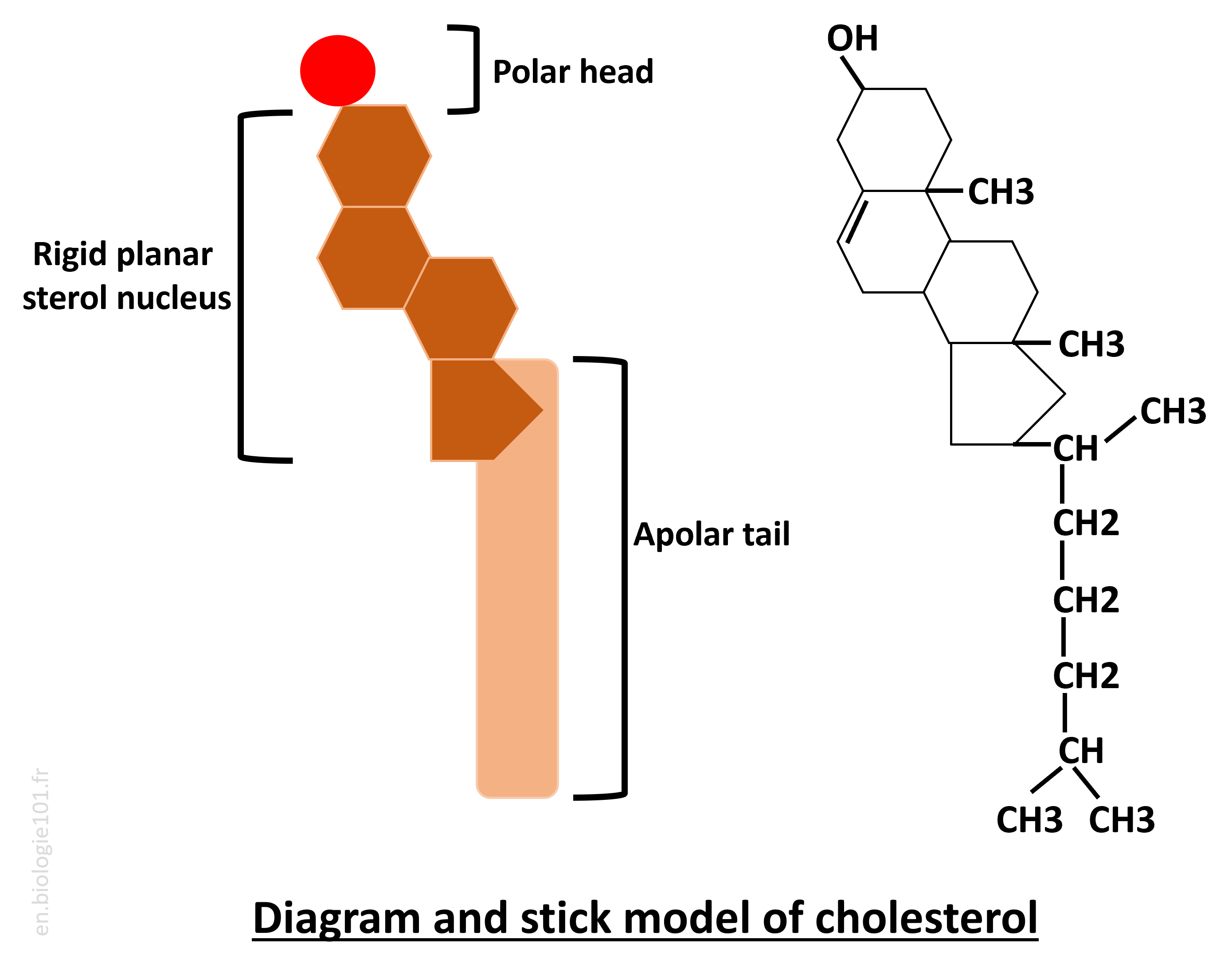
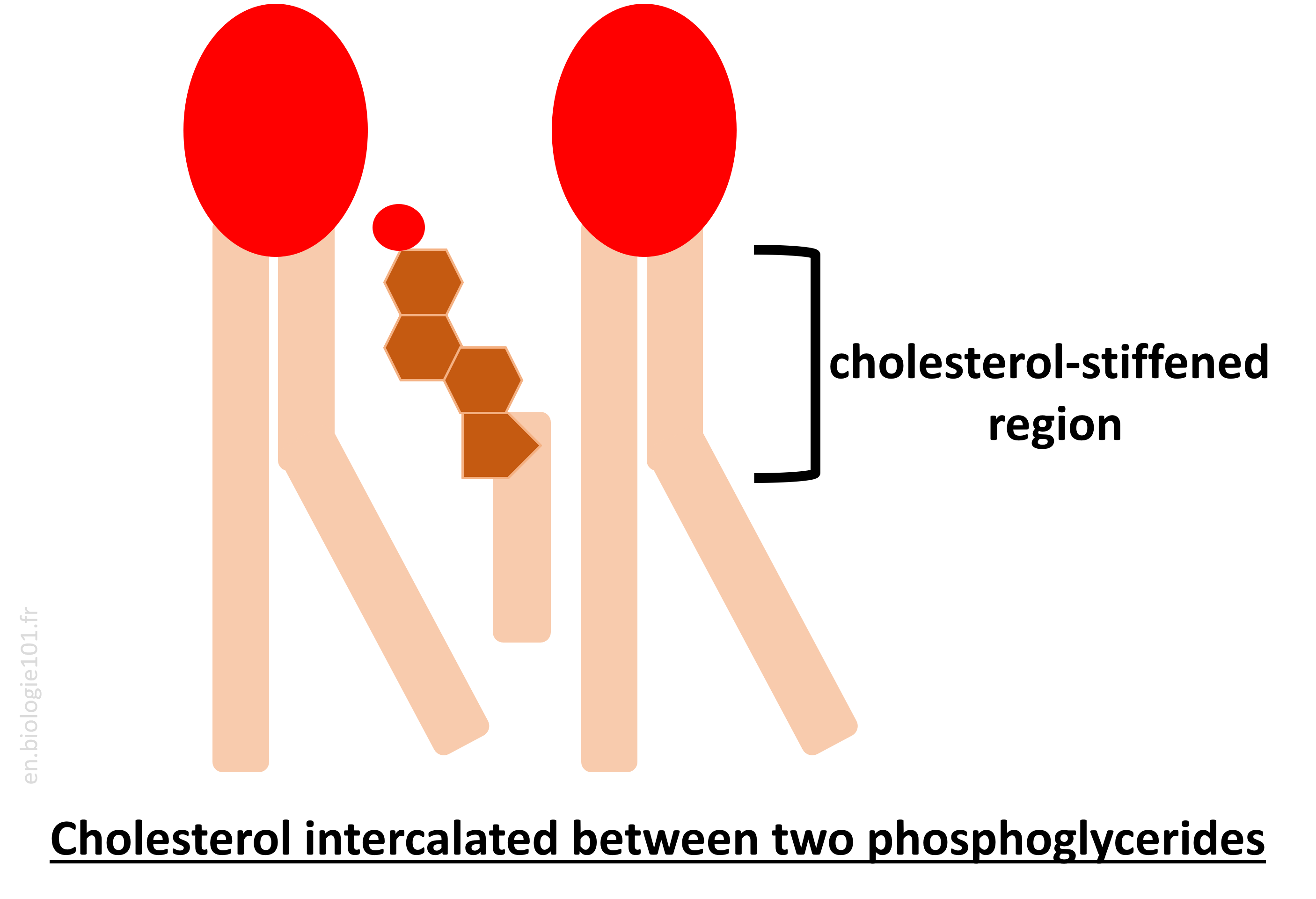
Cholesterol plays a role in membrane stability by intercalating between phospholipids. It enhances membrane rigidity at body temperature, which helps maintain structural integrity and decreases permeability and fluidity. Cholesterol is only found in animals; plants contain phytosterols and fungi contain ergosterol, which serves a similar function in maintaining membrane fluidity and stability in plant cells and fungi.
Additionally, cholesterol serves as a precursor for the synthesis of steroid hormones, bile acids, and vitamin D. It is also involved in the formation of lipid rafts—microdomains in the membrane that facilitate signaling pathways by clustering specific proteins. We will discuss this topic in the chapter dedicated to the organization and dynamics of plasma membranes.